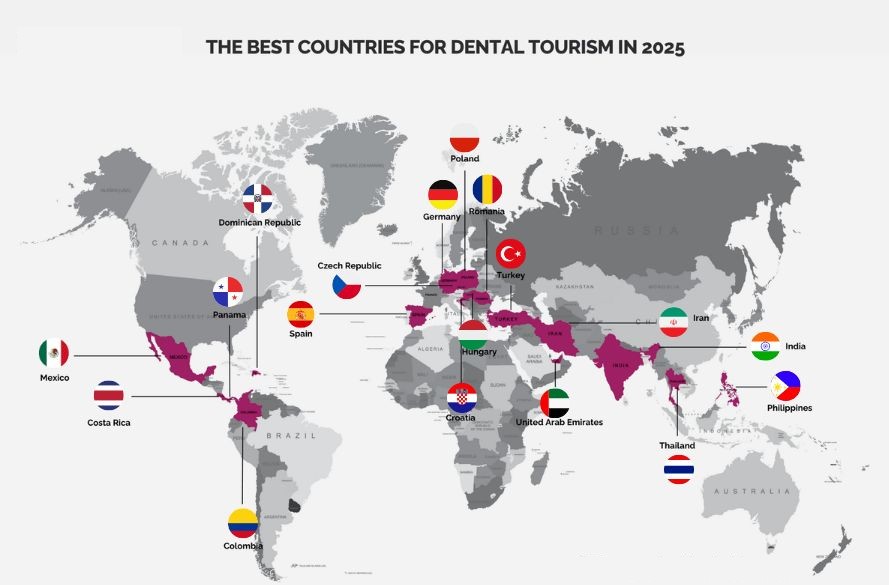
Over the past fifteen years, dental tourism has shifted from an occasional curiosity to a well-established healthcare pathway for many Americans. What began as a small group of cost-conscious travelers seeking affordable crowns or implants has grown into a diverse movement that includes retirees, working professionals, families, and even healthcare-savvy younger adults. Today, patients are not only comparing clinics within their own cities — they are comparing countries.
As a dental tourism expert who regularly works with U.S. patients exploring international options, one trend stands out more than any other: Europe and Turkey have become serious contenders for Americans seeking advanced dental care, with Hungary emerging as a particularly trusted destination. The recent expansion of direct flight routes from major U.S. hubs such as Philadelphia is accelerating this shift, making international treatment more accessible, predictable, and appealing.
This review explores why American patients are increasingly discovering dental care opportunities in Europe, Turkey, and Hungary, what motivates their decisions, how travel logistics are evolving, and why direct flight connections are quietly transforming the dental tourism landscape.
The Changing Mindset of American Dental Patients
For decades, the typical American approach to dentistry was local and insurance-driven. Patients chose clinics near home, relied on partial insurance coverage, and often accepted high out-of-pocket costs as unavoidable. Over time, however, several factors began reshaping this mindset:
-
Rising treatment prices for implants, prosthetics, and full-mouth restorations
-
Insurance limitations and annual maximums
-
Increased transparency through online reviews and patient forums
-
Greater comfort with international travel
-
Broader awareness of global healthcare standards
The result is a more informed and proactive patient population. Dental care is no longer viewed solely as a local service but as a global healthcare decision.
Why Europe Is Capturing American Attention
Europe offers a compelling blend of clinical expertise, cultural familiarity, and regulatory stability. Many European countries have long histories of dental education, research, and prosthetic innovation. For American patients, Europe often feels both foreign and reassuring at the same time — different enough to be cost-effective, yet similar enough in standards and expectations.
Key Advantages of European Dental Destinations
Regulatory Oversight
European Union healthcare regulations create a unified framework for medical devices, infection control, and professional licensing. This level of oversight provides reassurance to patients who prioritize safety and accountability.
Educational Depth
European dental universities are among the oldest in the world, producing generations of clinicians skilled in restorative and prosthetic disciplines.
Cultural Accessibility
English is widely spoken in major clinics, and communication barriers are typically minimal.
Balanced Treatment Philosophy
European dentistry often emphasizes conservative, biologically respectful approaches, appealing to patients seeking longevity rather than rapid cosmetic change.
Hungary: A Long-Standing Dental Tourism Leader
Among European destinations, Hungary holds a distinctive position. It has spent decades building a reputation as a center for advanced prosthetic and implant dentistry, attracting patients from across Western Europe long before American interest surged.
What Makes Hungary Stand Out
Specialization in Complex Cases
Hungarian clinics are particularly experienced in full-arch restorations, implant-supported bridges, and advanced prosthetic rehabilitation. High patient volumes have allowed clinics to refine workflows and develop multidisciplinary teams.
Transparent Planning
Detailed treatment plans, digital imaging, and structured timelines are common. Patients often receive comprehensive proposals before traveling, reducing uncertainty.
Cost Efficiency Without Perceived Compromise
Lower operational costs, combined with streamlined administrative systems, allow Hungarian clinics to offer competitive pricing while maintaining modern technology and laboratory partnerships.
International Patient Infrastructure
Dedicated coordinators, multilingual staff, and structured aftercare communication are standard features in leading clinics.
Turkey: Rapid Growth and Strong Aesthetic Focus
Turkey has become one of the fastest-growing dental tourism destinations in recent years. Cities such as Istanbul and Antalya have invested heavily in modern clinics, digital technology, and hospitality-style patient services.
Why Turkey Appeals to Americans
Competitive Pricing Models
Turkey often attracts patients seeking cosmetic dentistry, veneers, and implant packages at attractive price points.
Modern Clinic Environments
Large, visually impressive facilities create a strong first impression and convey technological advancement.
Integrated Travel Packages
Some clinics bundle accommodation, transfers, and treatment coordination, simplifying logistics for first-time travelers.
Points for Consideration
While Turkey offers many high-quality providers, variability between clinics can be wider than in longer-established European hubs. Thorough research, credential verification, and realistic expectations are essential.
The Role of Direct Flights in Dental Tourism Decisions
One of the most underestimated influences on dental tourism growth is air travel convenience. When flights are indirect, time-consuming, or unpredictable, patients hesitate. Direct routes change that equation dramatically.
The expansion of direct flights from U.S. cities such as Philadelphia to European capitals is opening new pathways for American dental travelers. Reduced travel time, fewer layovers, and clearer scheduling make treatment abroad feel more practical and less disruptive.
Why Direct Flights Matter
Reduced Travel Fatigue
Patients undergoing dental procedures benefit from shorter journeys, especially when follow-up visits are required.
Improved Scheduling Flexibility
Direct routes simplify coordination between treatment phases and personal commitments.
Psychological Comfort
Nonstop flights reduce the perceived “distance” between home and clinic, encouraging patients who might otherwise hesitate.
Budapest as a Gateway Destination
Budapest has become a focal point for American dental tourism not only because of its clinics but also because of its accessibility. Direct connections from major U.S. hubs shorten travel times and align well with treatment schedules that often require two visits several months apart.
For patients from the northeastern United States, including Pennsylvania and surrounding regions, improved flight options make Budapest feel less like a distant choice and more like a viable extension of domestic healthcare planning.
Comparing Destinations: Europe, Turkey, and Hungary
Each destination offers unique strengths, and patient priorities often determine the best fit.
Hungary
-
Strong reputation in implantology and prosthetics
-
Long history of international dental care
-
Balanced pricing and regulatory reassurance
Turkey
-
Rapidly growing cosmetic dentistry market
-
Modern facilities and hospitality-style services
-
Attractive package offers
Broader Europe
-
Diverse treatment philosophies
-
Established regulatory frameworks
-
Cultural familiarity and multilingual accessibility
No single country universally outperforms others. Instead, the choice depends on clinical needs, travel preferences, and personal comfort levels.
Patient Experience Beyond the Clinic
Dental tourism is not solely about treatment — it is also about environment and recovery. Many American patients appreciate the opportunity to recover in culturally rich settings that offer relaxation and distraction from clinical stress.
European cities often provide:
-
Walkable historic districts
-
Calm café cultures
-
Accessible public transport
-
Safe urban environments
These factors contribute to a sense of balance between healthcare and personal well-being.
Addressing Safety and Continuity Concerns
Safety is a central consideration for any patient traveling abroad for medical care. Reputable clinics address this through:
-
Transparent credentials and licensing
-
Detailed treatment plans and guarantees
-
Remote follow-up consultations
-
Coordination with local dentists when necessary
Continuity of care is increasingly supported by digital communication, allowing patients to maintain contact with their overseas clinic long after returning home.
Financial Perspective: Value vs. Price
One of the key motivations behind dental tourism is financial value. However, experienced patients learn quickly that value is not the same as low price. True value includes:
-
Material quality
-
Clinical expertise
-
Longevity of results
-
Clarity of aftercare
Destinations such as Hungary often attract patients not because they are the cheapest, but because they balance cost with consistent quality and professional accountability.
The Psychological Shift Toward Global Healthcare
American patients are becoming more comfortable viewing healthcare as a global marketplace. Access to information, digital consultations, and international patient testimonials have reduced uncertainty and increased confidence.
This shift is not driven solely by economics. It is also influenced by a desire for control, transparency, and participation in decision-making.
Who Is Most Likely to Travel for Dental Care?
While dental tourism appeals to a broad demographic, several groups are particularly active:
-
Patients requiring multiple implants or full-arch rehabilitation
-
Individuals without comprehensive dental insurance
-
Retirees seeking long-term value
-
Professionals balancing cost with high expectations of quality
For these patients, the ability to combine efficient treatment with manageable travel logistics is highly attractive.
The Future of Dental Tourism for U.S. Patients
As direct flight networks expand and international clinics continue refining patient services, dental tourism is expected to grow steadily. The convergence of affordability, accessibility, and clinical sophistication positions Europe — particularly Hungary — alongside Turkey as a central pillar in this movement.
Improved air connectivity from cities like Philadelphia symbolizes more than convenience; it represents a broader integration of global healthcare choices into everyday American decision-making.
Conclusion: Expanding Horizons, Informed Decisions
Dental tourism for U.S. patients is no longer an experimental idea. It is a carefully evaluated option shaped by rising domestic costs, increasing global transparency, and evolving travel infrastructure. Europe, Turkey, and Hungary have each carved distinct roles within this landscape, offering different strengths that align with varied patient priorities.
Direct flights from major American cities are quietly transforming what once felt distant into something practical and attainable. For many patients, the discovery of dental care abroad is not about escaping domestic systems — it is about expanding possibilities and reclaiming choice.
When approached with research, realistic expectations, and open communication, dental tourism can become a strategic extension of personal healthcare planning rather than a leap into the unknown.